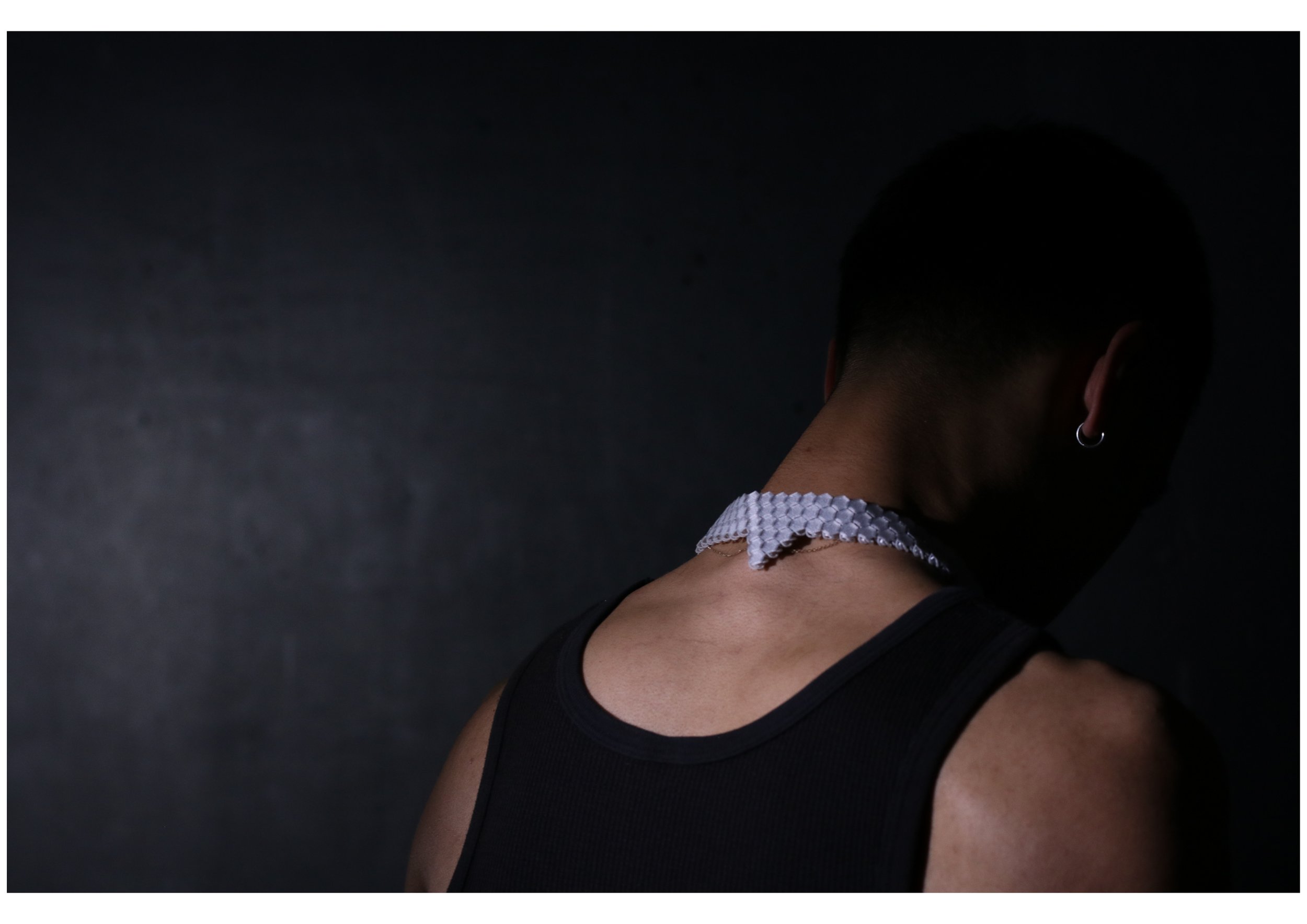
The Conscious Spine — Jewellery that Feels
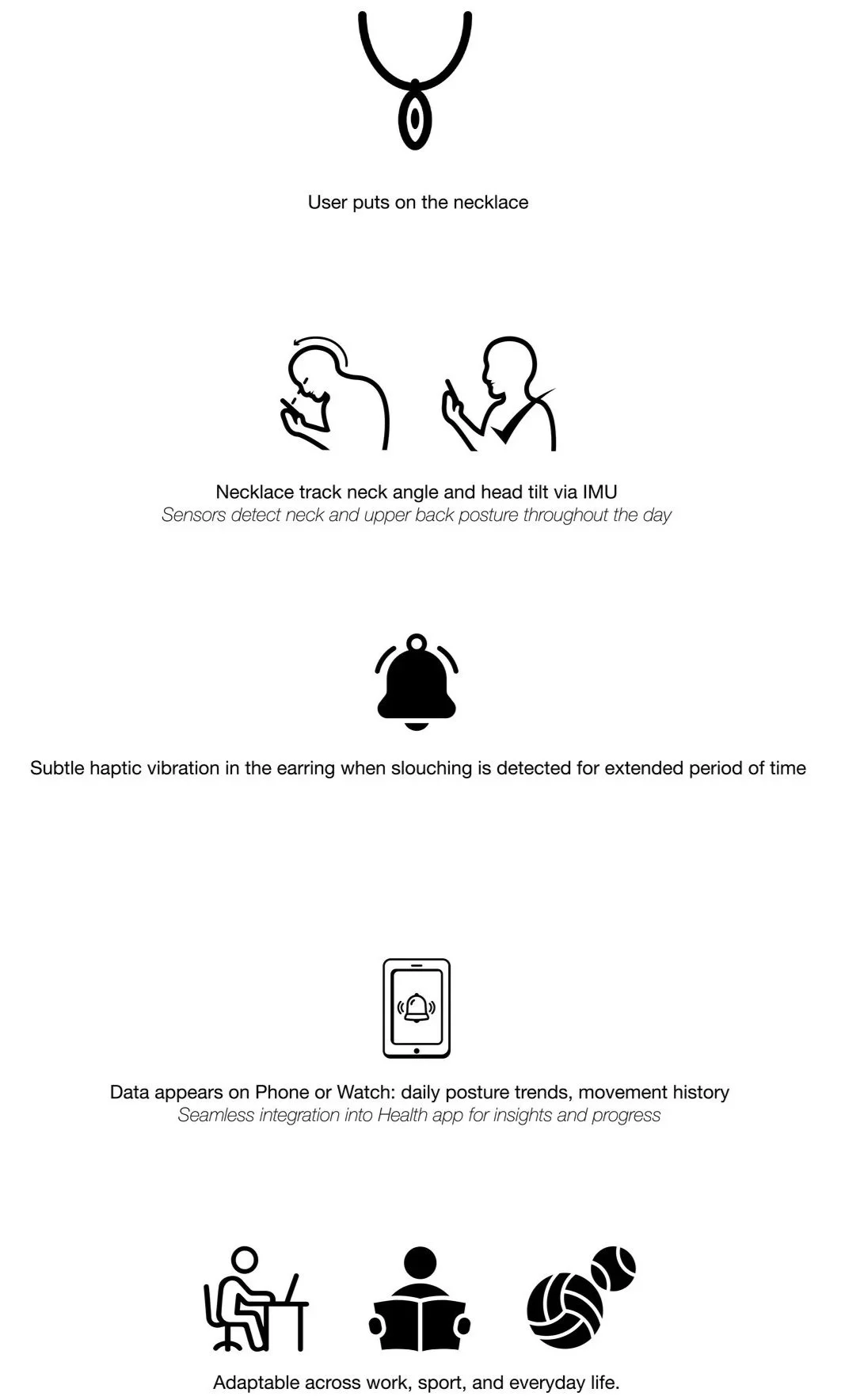
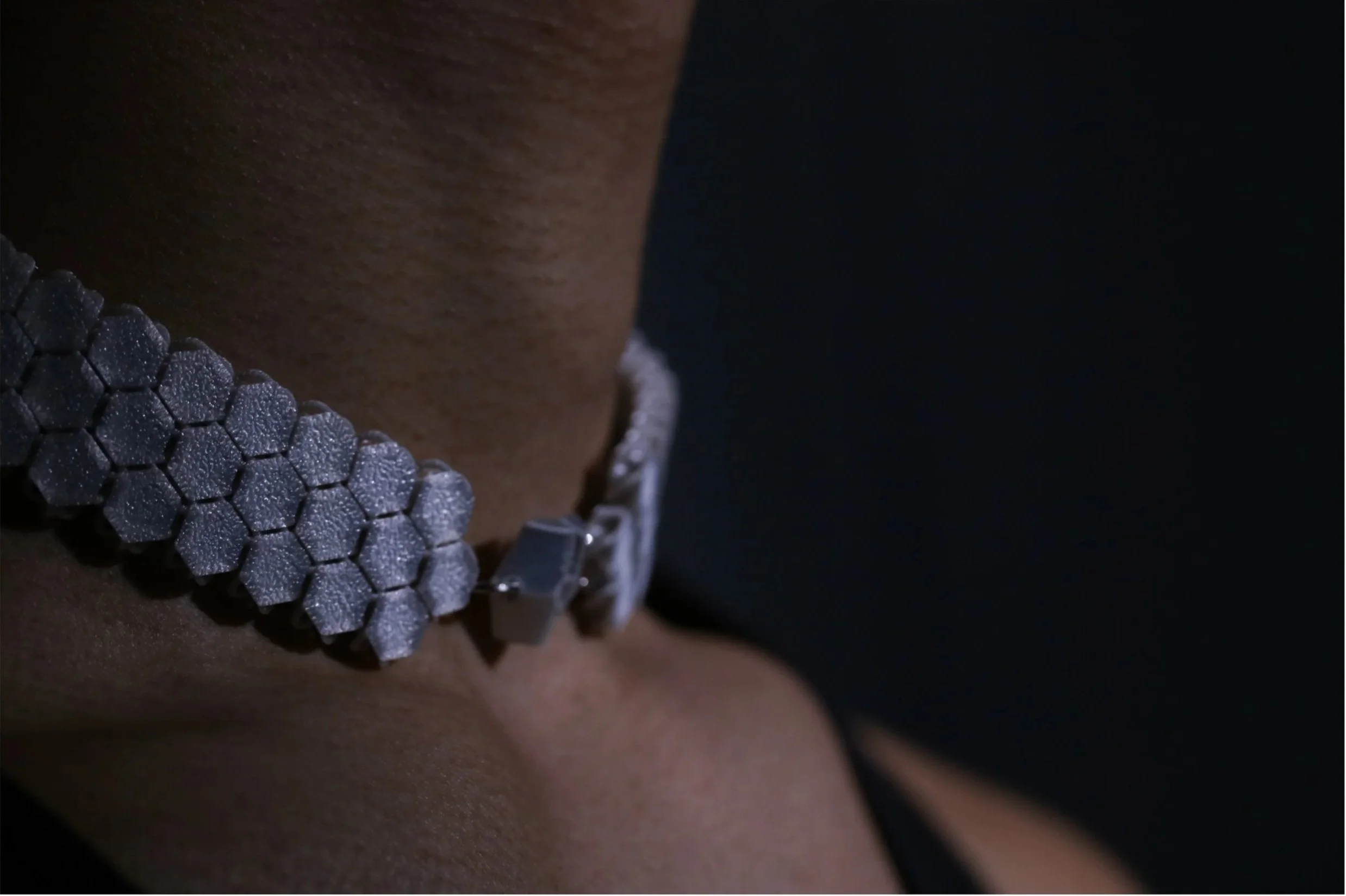
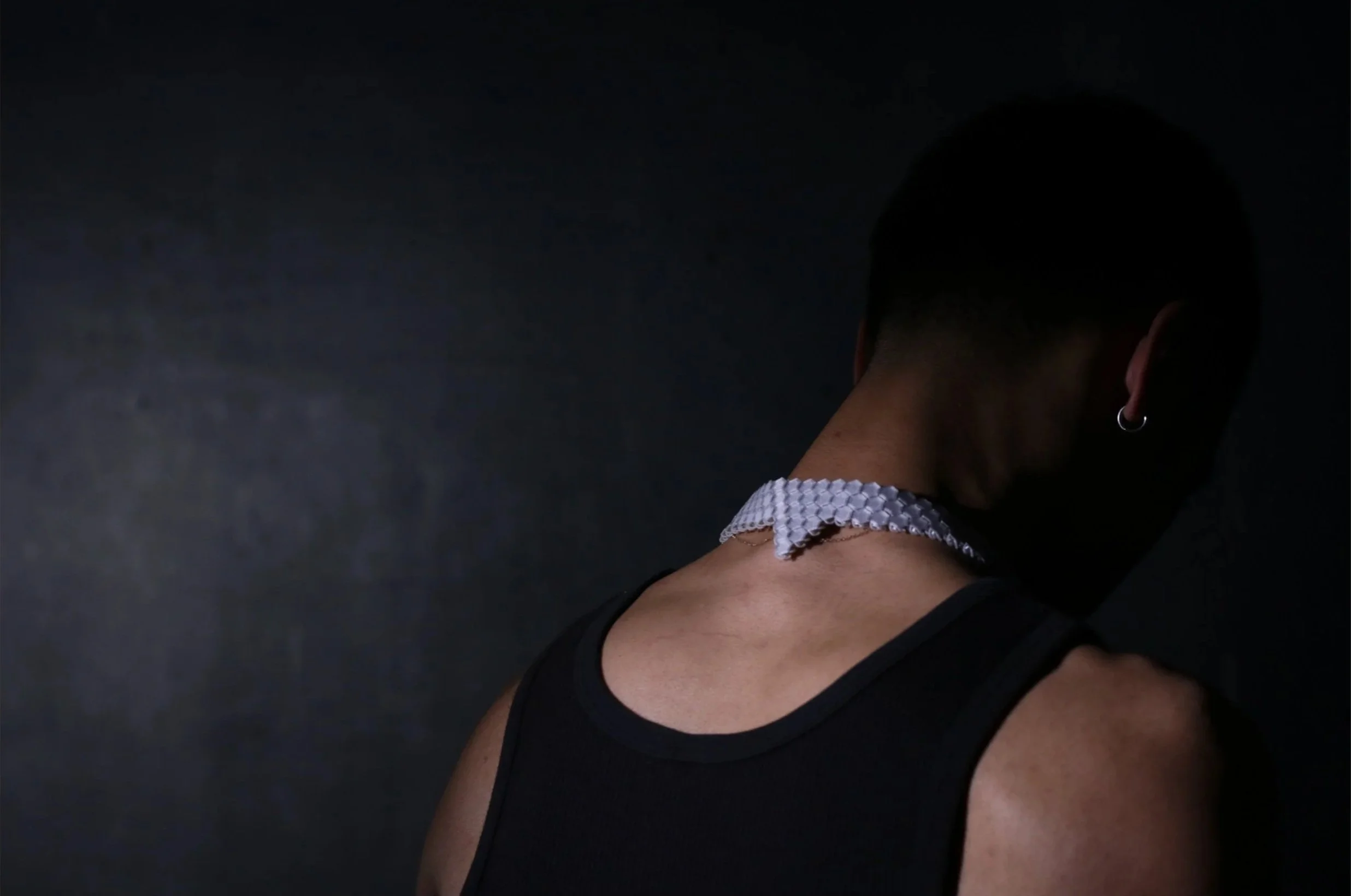
Posture Necklace transforms wearable technology into an intimate extension of the body. Using 3D printing and motion-sensing, it delivers subtle haptic feedback to guide posture. Where health devices often feel clinical, this piece blends wellness and jewellery, creating quiet interaction between wearer and object.
It reimagines technology as personal, elegant, and expressive—supporting awareness and behaviour without compromising form.
Company & Brand
This project references a leading global technology company recognised for shaping culture through innovation, design, and human-centred experiences; Apple. Evolving from personal computing to a seamless ecosystem of devices and services, the company has expanded into health and lifestyle — developing tools that track fitness, monitor vitals, and support both physical and mental wellbeing. Guided by the belief that business should be a force for good, it continues to empower people through innovation, collaboration, and values-led design, demonstrating how technology can inspire creativity, connection, and progress. Expansion from entertainment to health and lifestyle through devices and services which track fitness and vitals and monitors mental and physical health.
The Problem
Forward Head Posture (FHP) is a growing musculoskeletal issue caused by prolonged use of digital devices. It occurs when the head protrudes forward relative to the cervical spine, leading to spinal curvature, neck pain, balance problems, and long-term health effects. Conventional assessment methods — including visual observation, imaging, or multi-sensor systems — are often inaccurate, invasive, or unsuitable for daily use. A study by Park and Jung (2024) explored a low-cost, wearable system designed to detect FHP in real time and prompt users to correct their posture in everyday settings.
Context
In today’s digital and sedentary lifestyle, Forward Head Posture (FHP) has become a reflection of broader behavioural and technological habits. With increased screen time from study, work, and entertainment, many people spend long hours in static positions that strain the neck and upper spine. In New Zealand, musculoskeletal disorders are among the most common health issues, yet prevention often receives less attention than treatment. Subtle postural deviations like FHP typically develop unnoticed, becoming chronic over time. This highlights a growing need for wearable, preventive solutions that can integrate seamlessly into daily life, encouraging awareness and early correction before long-term damage occurs.
Competition
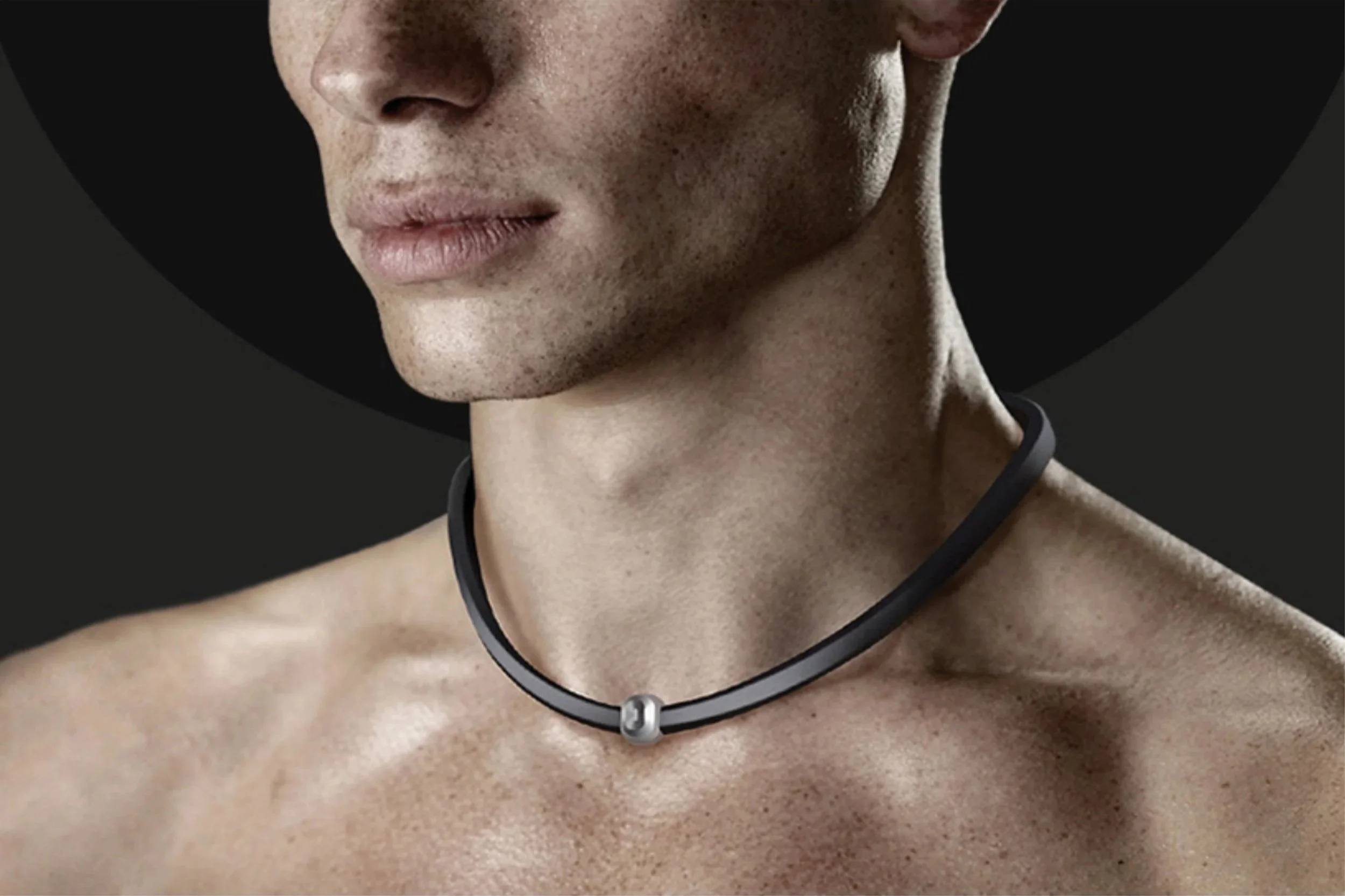
Fineck Posture Necklace (IMU-Based Neck Monitoring): The Fineck smart necklace uses an IMU sensor to track neck movements, head tilt, and overall posture. It provides real-time feedback through a companion app, helping users correct forward head posture and reduce musculoskeletal strain. This precedent shows how compact, wearable IMU technology can monitor posture unobtrusively, blending comfort, aesthetics, and actionable health insights—demonstrating opportunities for lifestyle-focused posture wearables.
Value Proposition
This project proposes a wearable system in the form of jewellery — designed to monitor and support posture while integrating seamlessly into everyday life. It acknowledges the growing prevalence of Forward Head Posture and aligns with the broader evolution of technology from entertainment to health and lifestyle — where devices now track fitness, monitor vitals, and promote both mental and physical wellbeing. Positioned within this space, the piece redefines how health technology can exist: not as a clinical tool, but as an elegant, personal accessory. Rooted in human-centred design and refined craftsmanship, it merges functionality with emotional connection — creating an adaptive system that bridges prevention, rehabilitation, and comfort, empowering users to care for their wellbeing discreetly and meaningfully

Tracking Forward Head Posture
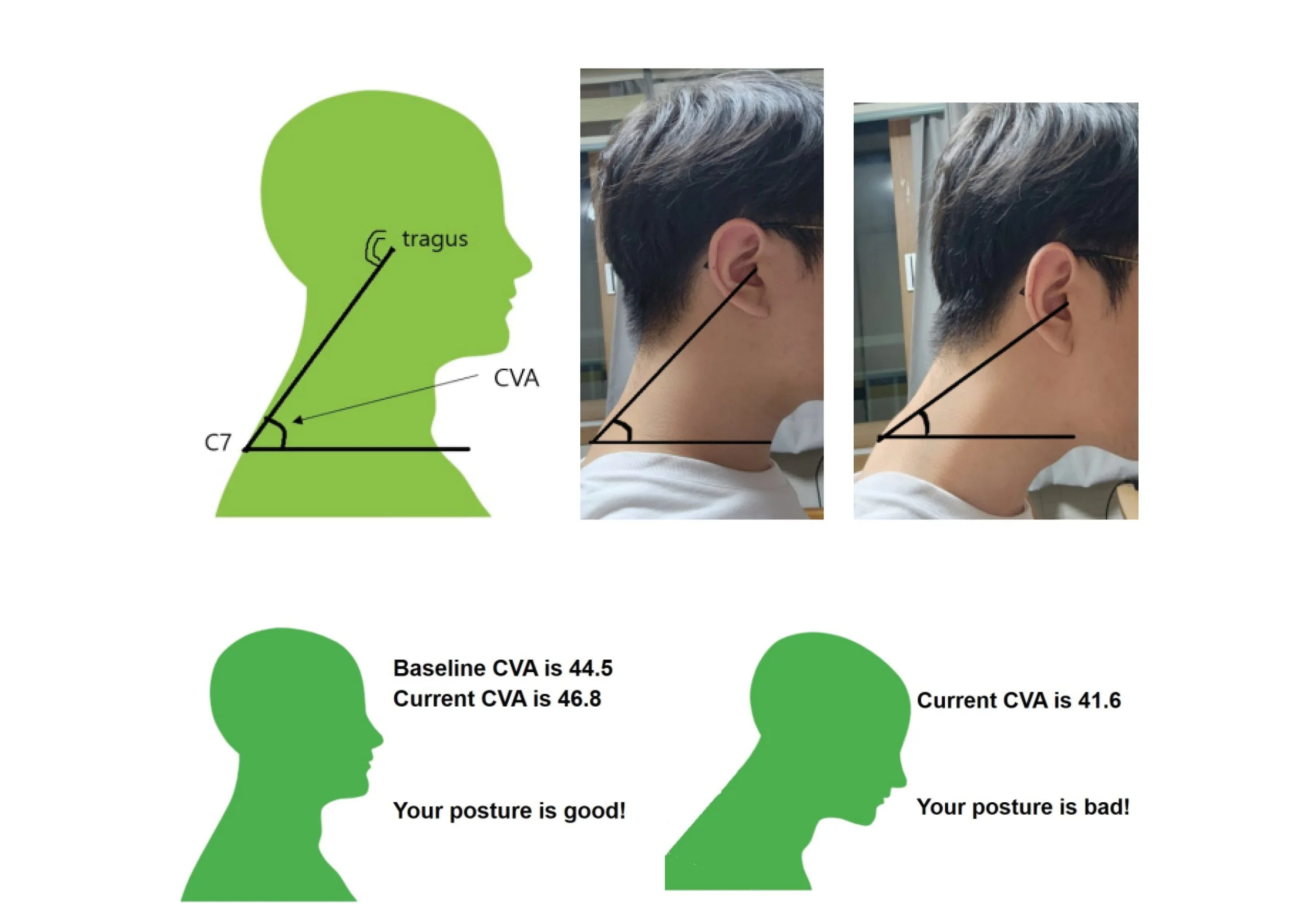
The study used the craniovertebral angle (CVA) as the clinical reference for posture evaluation. CVA is defined as the angle between a line connecting the tragus of the ear to the C7 vertebra (the prominent bone at the base of the neck) and a horizontal line through C7.
A larger CVA (~50°) indicates good posture.
A smaller CVA (~30°) indicates FHP.
By using C7 as the anchor point, the researchers could distinguish between temporary head movements (such as looking down) and true postural misalignment.
System Design & Methodology
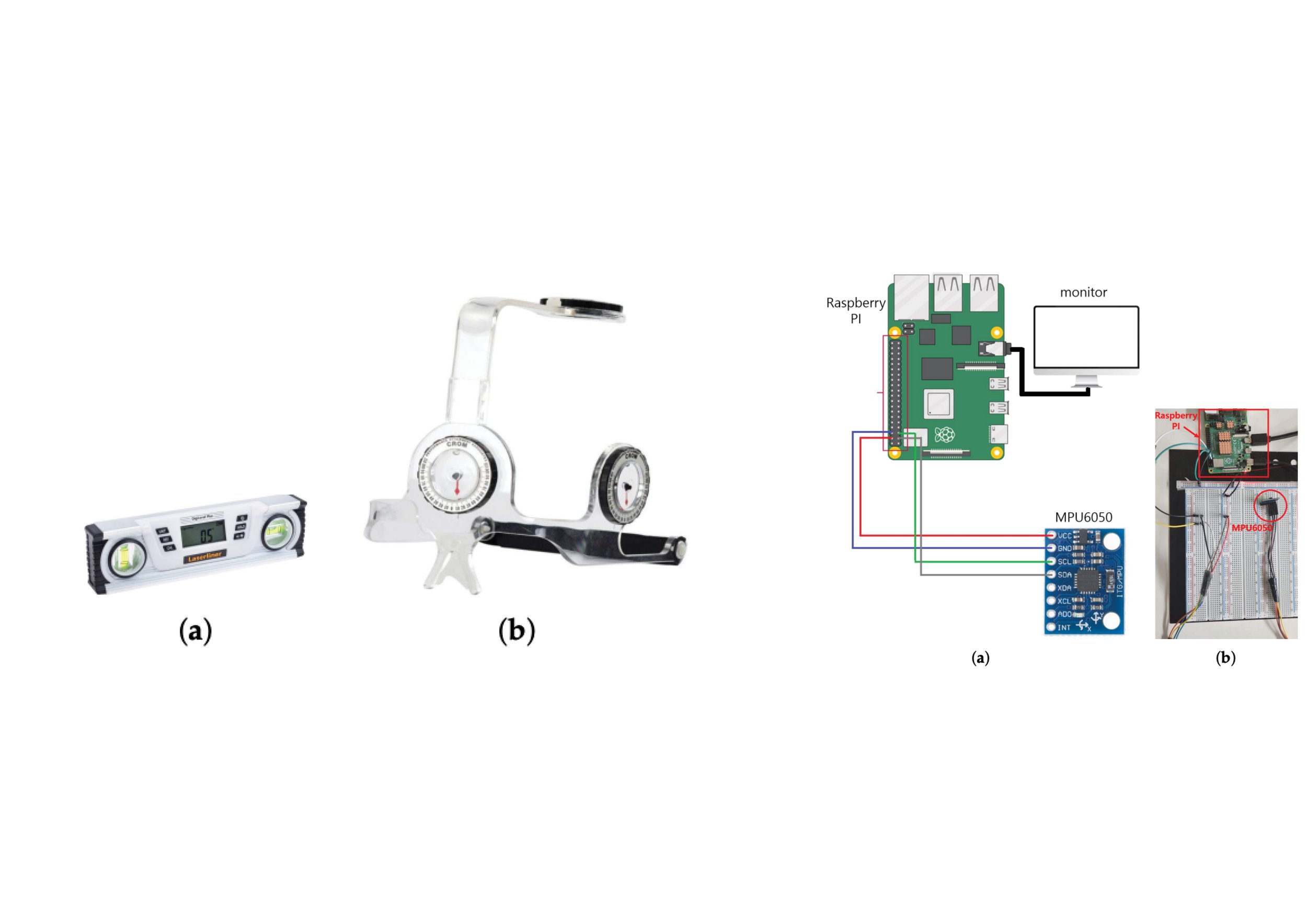
The system employed a single MPU6050 inertial measurement unit (IMU) sensor placed on the cervical spine and connected to a Raspberry Pi. The sensor measured gravitational acceleration to calculate a forward tilt angle (θ), which was then used to approximate CVA (CVA = θ + 89°).
Key features of the system included:
Personalised baseline CVA: Each participant maintained good posture for 10 seconds at the start of the experiment to establish their baseline.
Detection algorithms:
FHP was detected if the CVA dropped ≥5° below baseline for more than 10 seconds.
A second algorithm tracked whether posture was improving or deteriorating.
Feedback mechanism: Real-time visual feedback displayed the user’s CVA and a posture figure, prompting correction when needed.
Comparisons: Other FHP detection methods have been explored, such as camera-based tracking, multi-sensor systems, and smartphone applications. Camera systems often raise privacy concerns and are impractical in everyday environments; multi-sensor arrangements increase cost, bulk, and complexity; and apps that rely on smartphone orientation cannot capture posture consistently across different activities. By contrast, the single-IMU cervical approach offers a low-cost, discreet, and wearable solution that integrates naturally into accessories, making it more feasible for daily use.
Sensor Placement
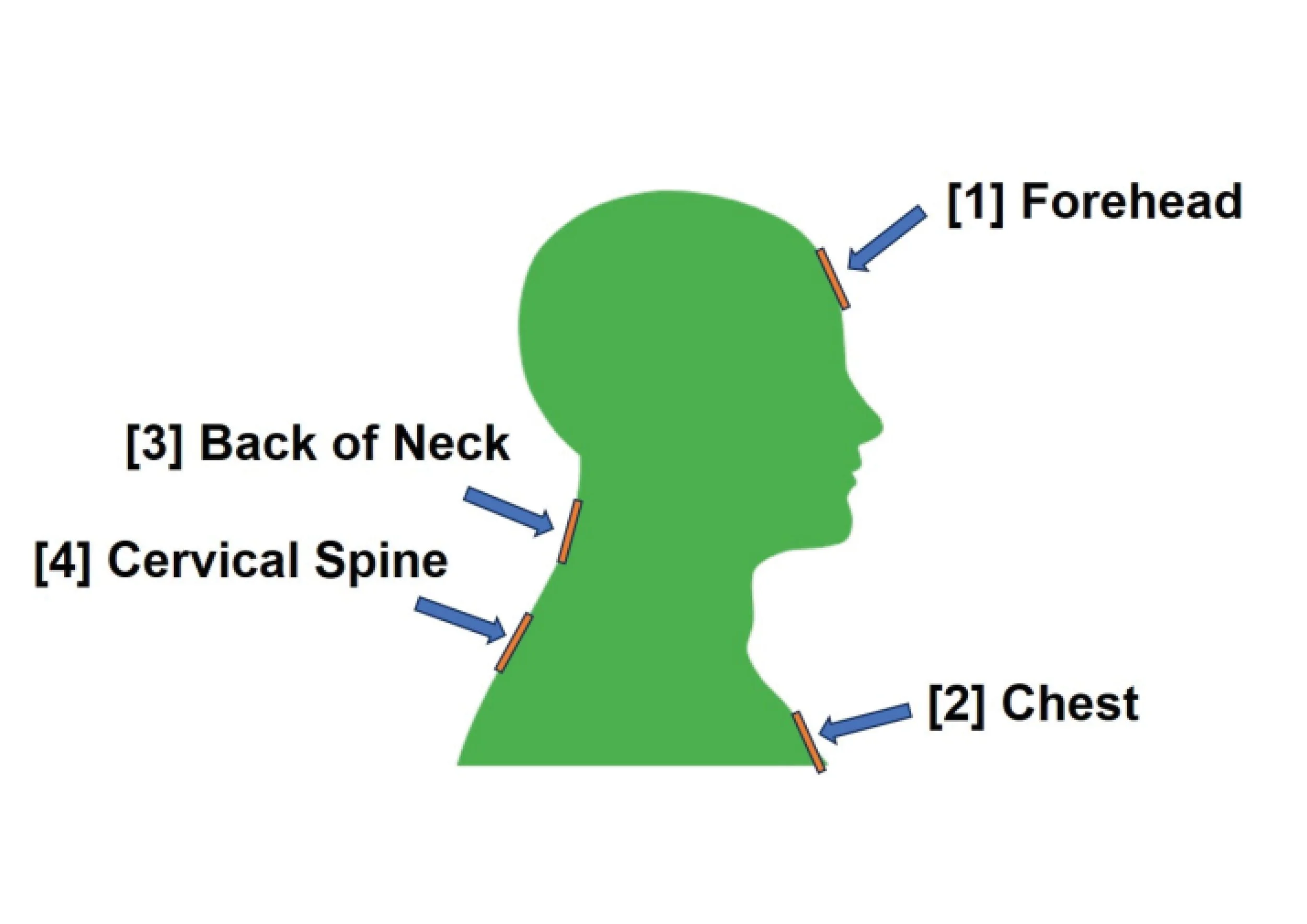
To identify the optimal measurement site, the researchers tested four sensor locations on the body:
-Forehead
-Chest
-Back of the neck
-Cervical spine (C7 area)
The results showed that:
Forehead and back of the neck often misclassified simple head tilt as FHP.
Chest produced too small a signal change to reliably detect posture.
Cervical spine (C7) demonstrated the clearest, linear relationship between IMU tilt and CVA, making it the most reliable single-sensor location.
As a result, the cervical spine was chosen as the point of interest for the system.
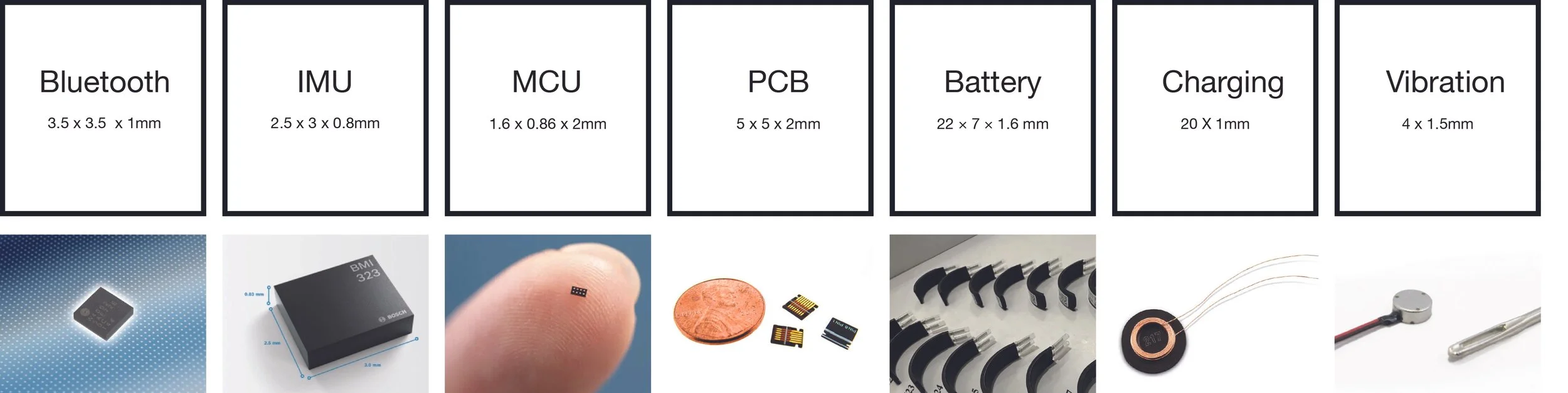
Total Volume: 644 mm³
Minimum practical module thickness: ~5–6 mm
This design investigates possibilities for wearable electronics. Actual implementation would require detailed engineering validation
First Concepts
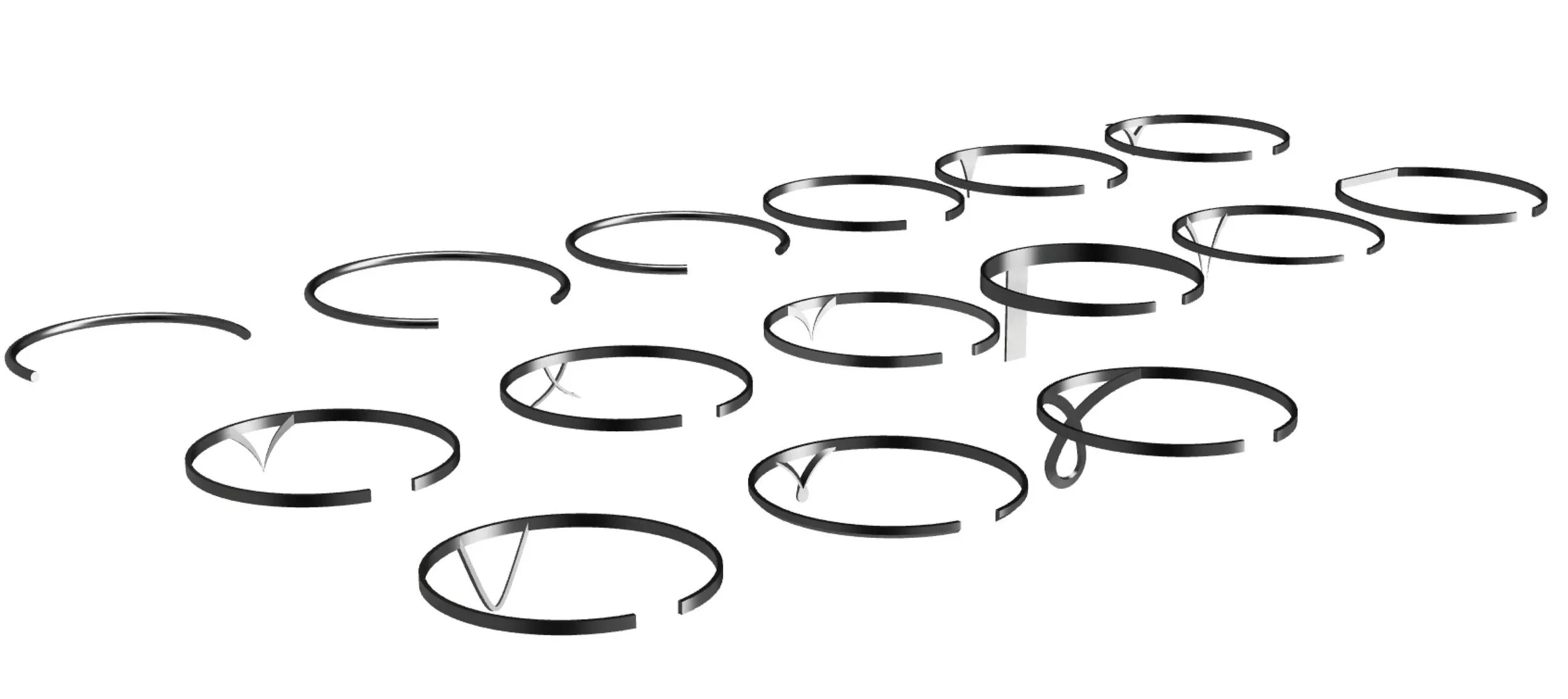
Exploration using average neck measurements to model simple revolved forms with an added extension to cover the cervical spine area.
Average Neck Circumferences
Men 38.7 cm
Women 33.3 cm
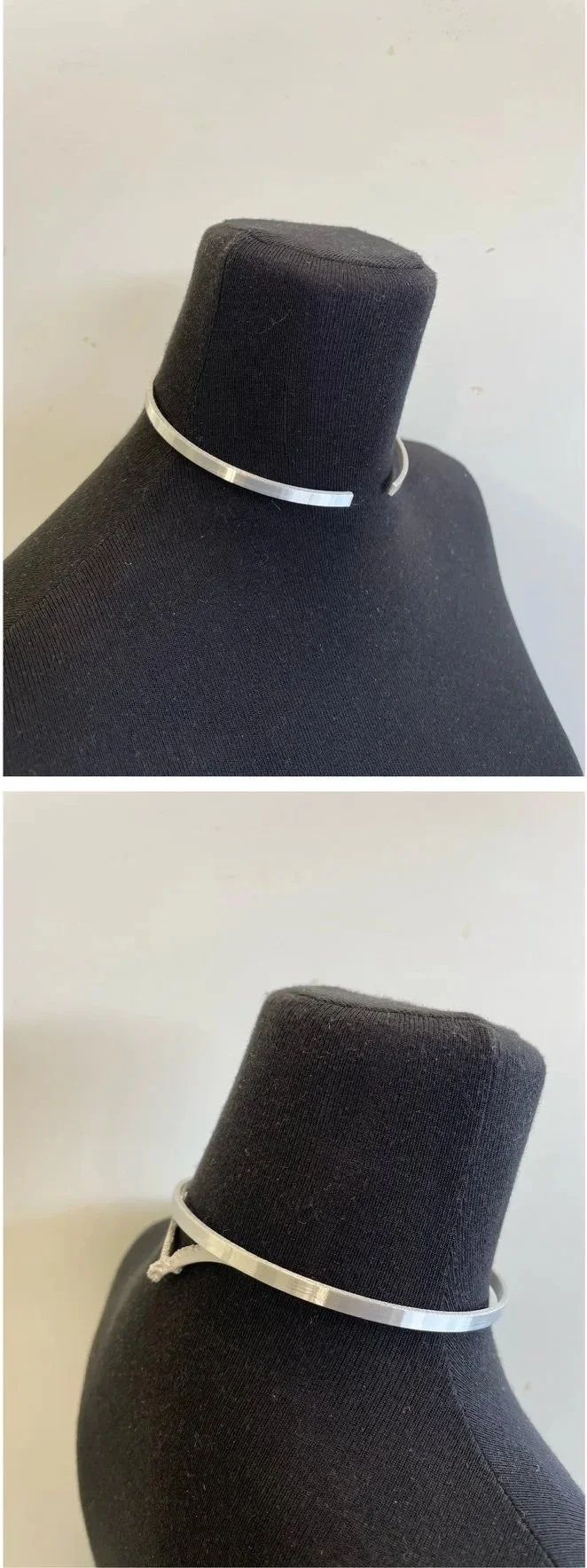
Context photos against mannequin
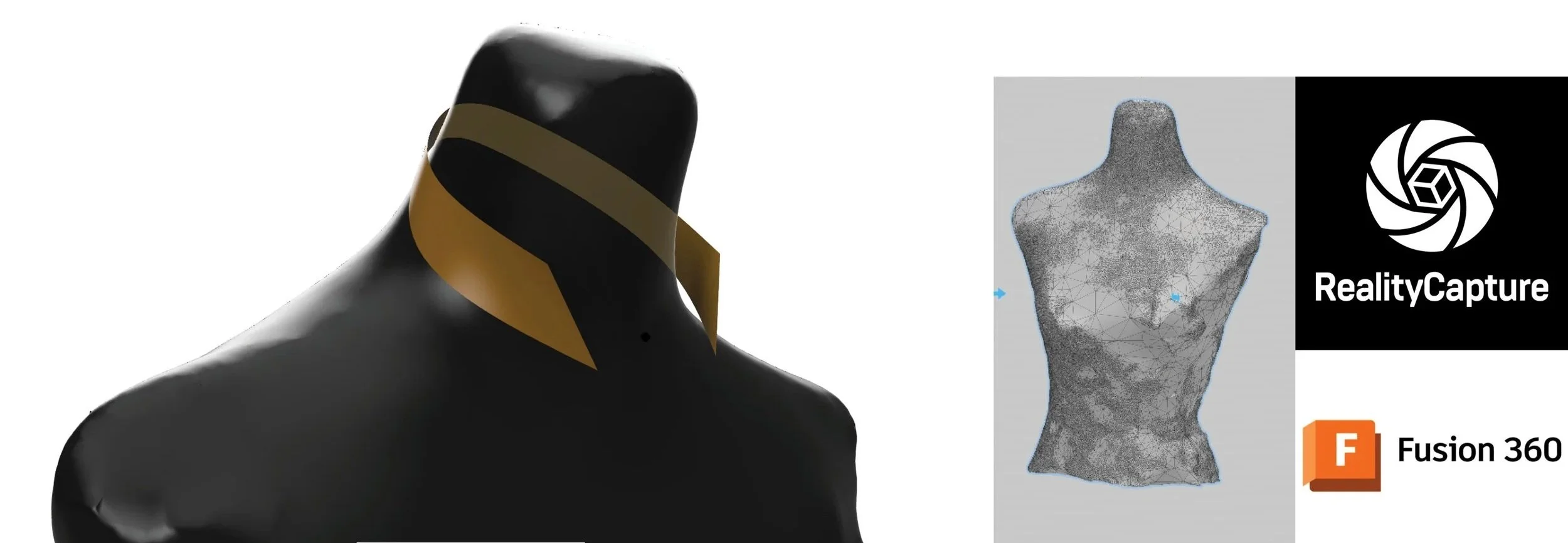
Identified contour issues, 3D-scanned a mannequin, cleaned the model in RealityCapture, and rebuilt the form in Fusion 360.
Second Concepts
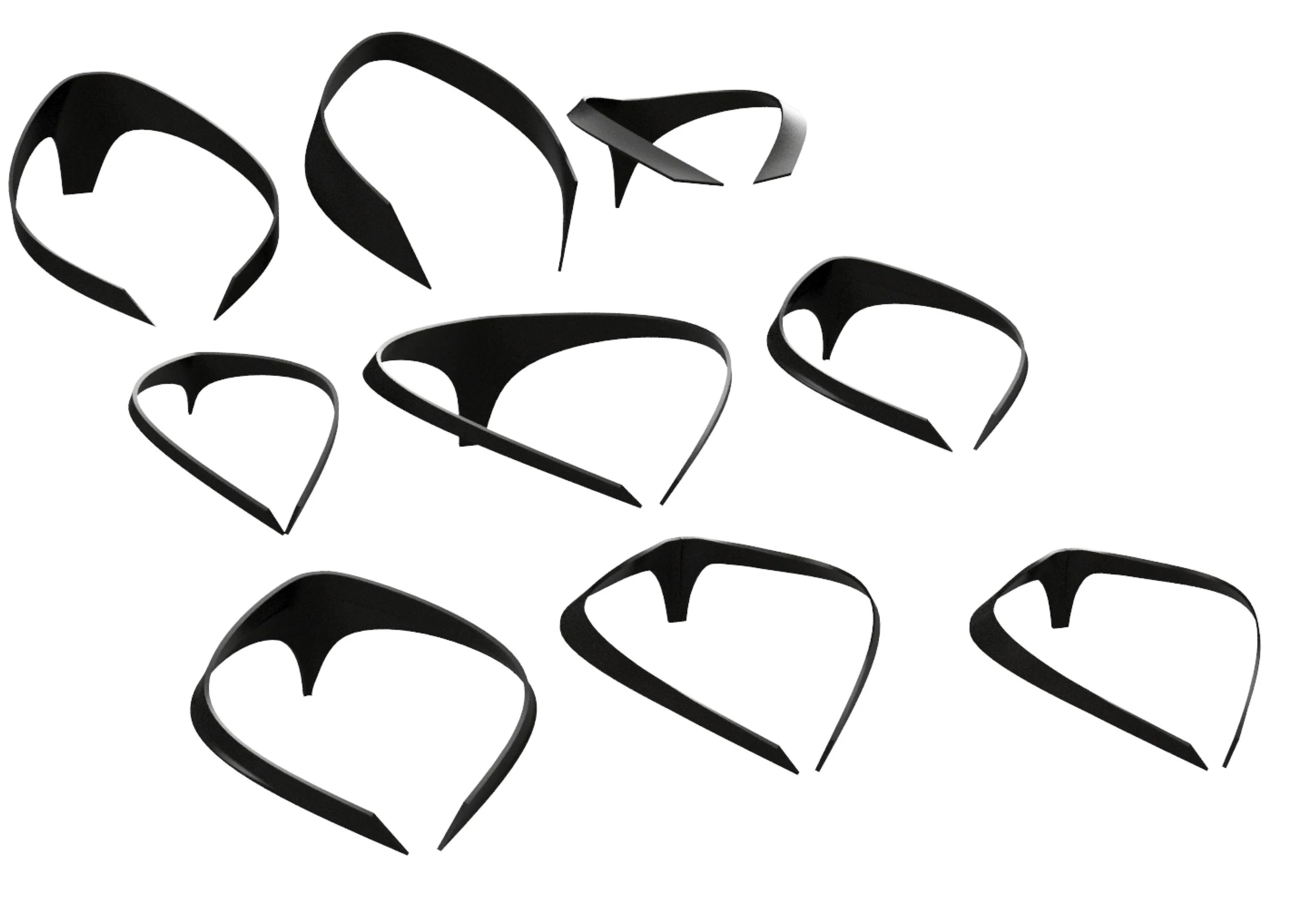
Rendered models
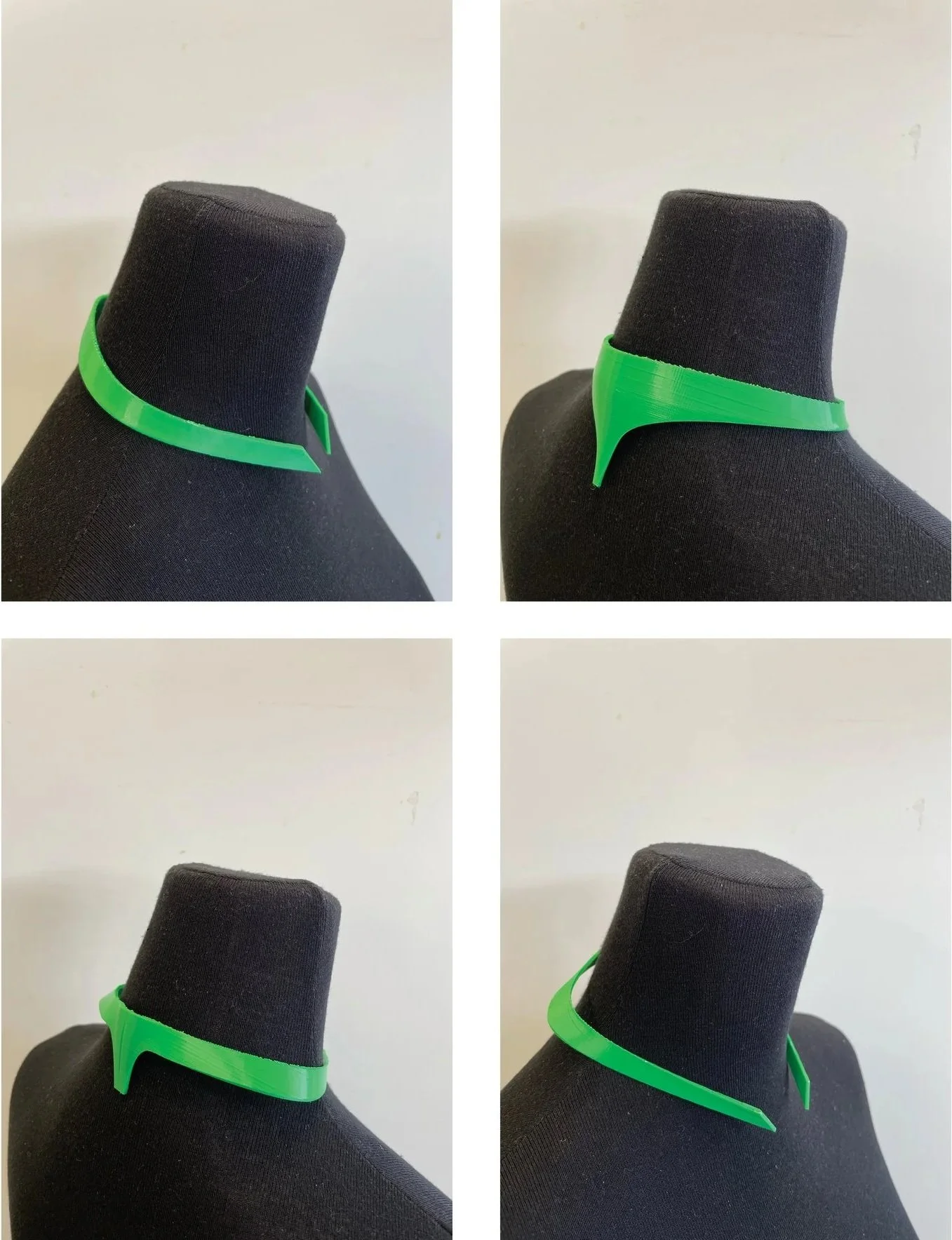
Context photos against mannequin
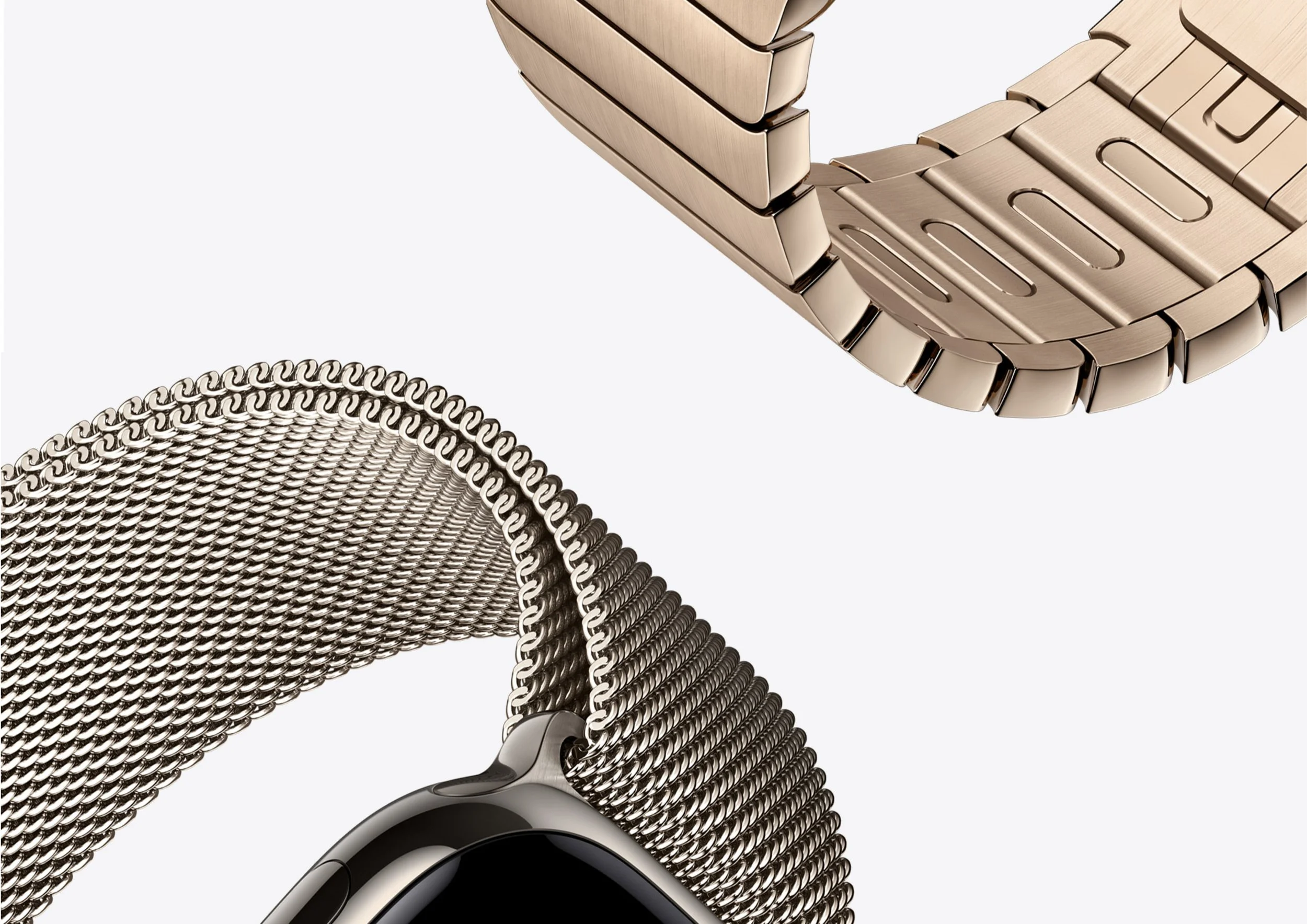
Studied jewellery chains and watch-strap links to understand flexible mechanics and apply them to a neck-conforming design.
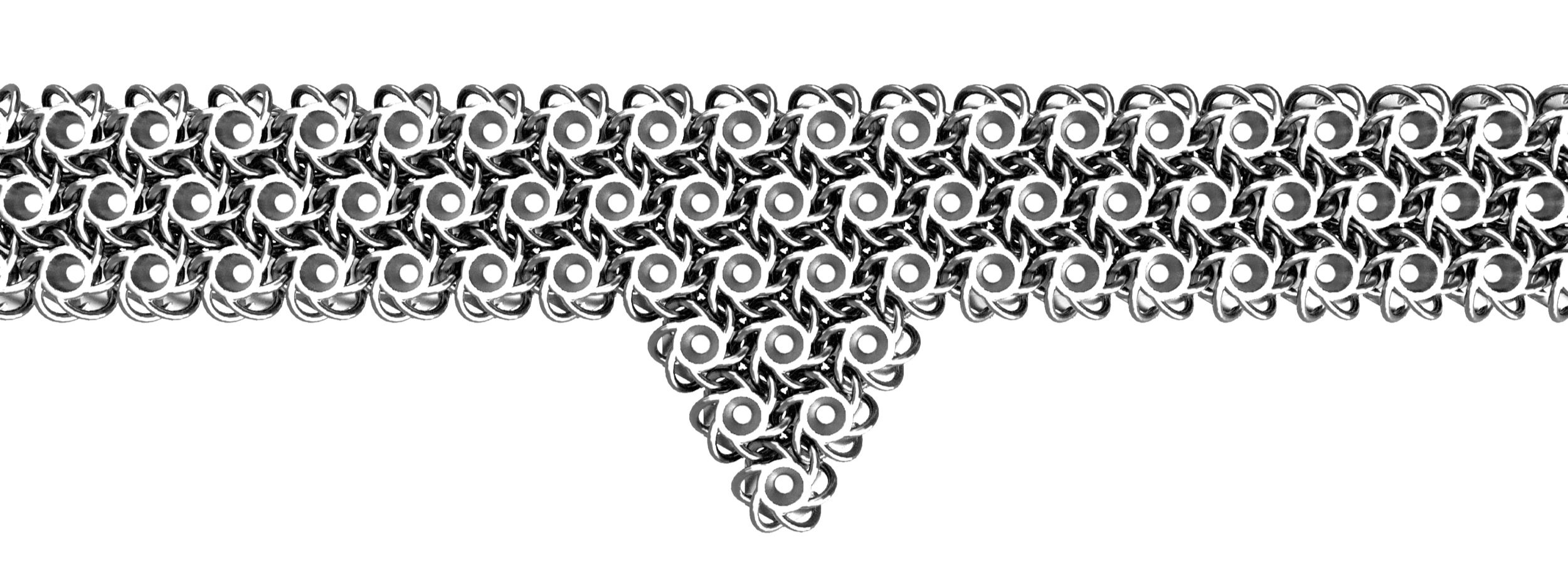
Discovered NASA fabric—a linked, mesh-like structure that bends and conforms seamlessly around any form.
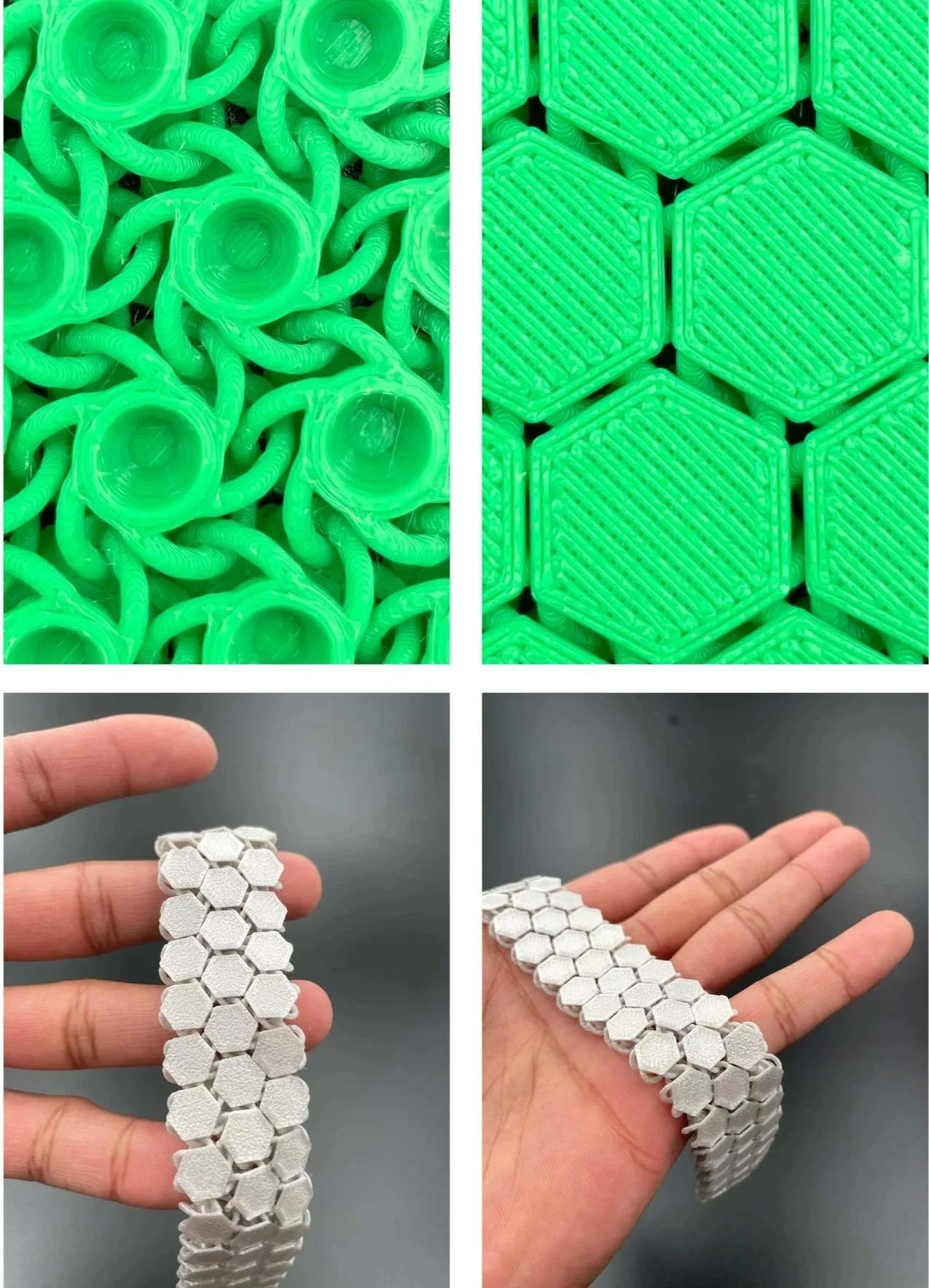
3D Printed Tests
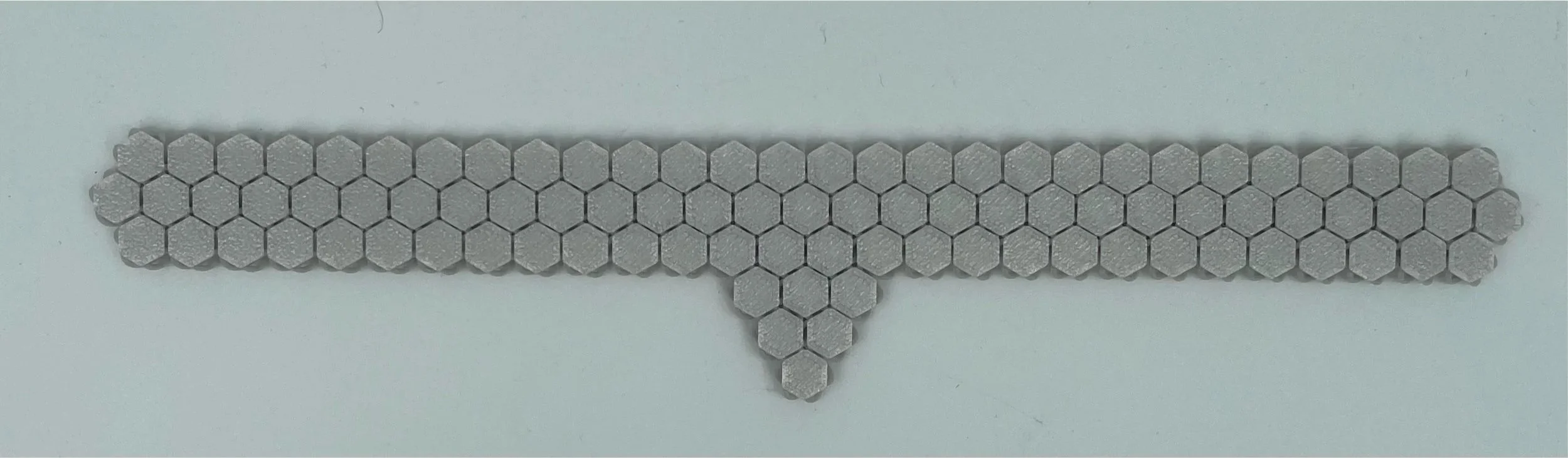
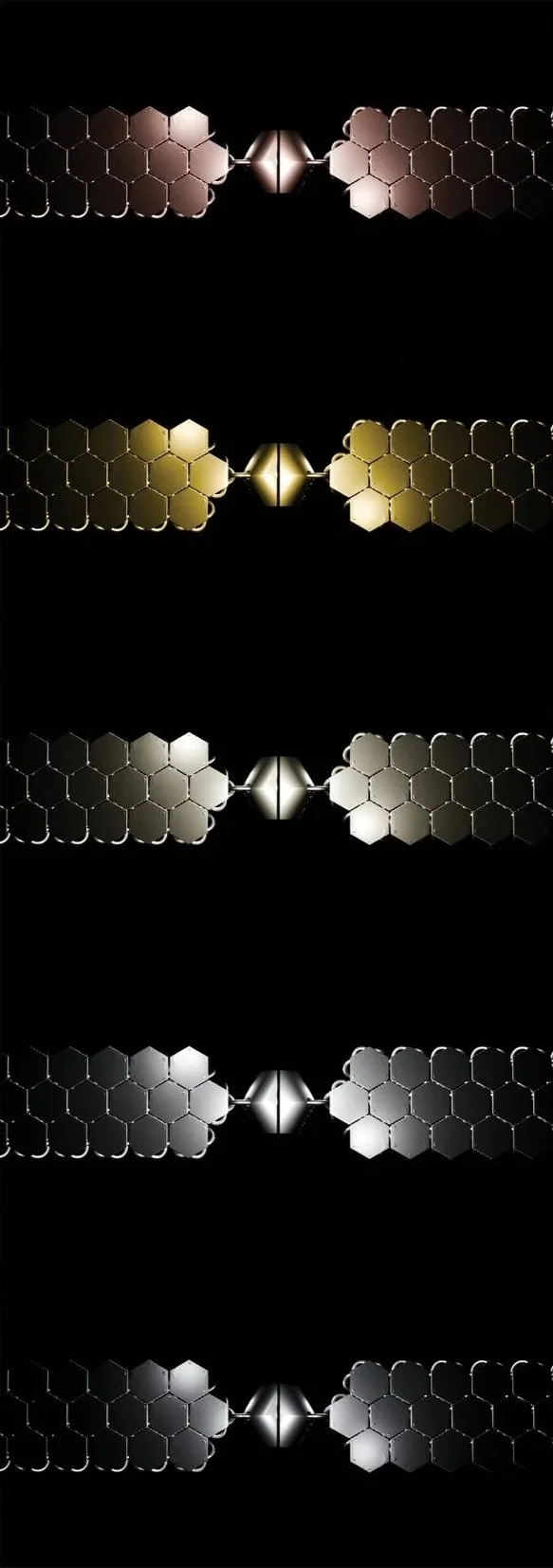
Final prototype
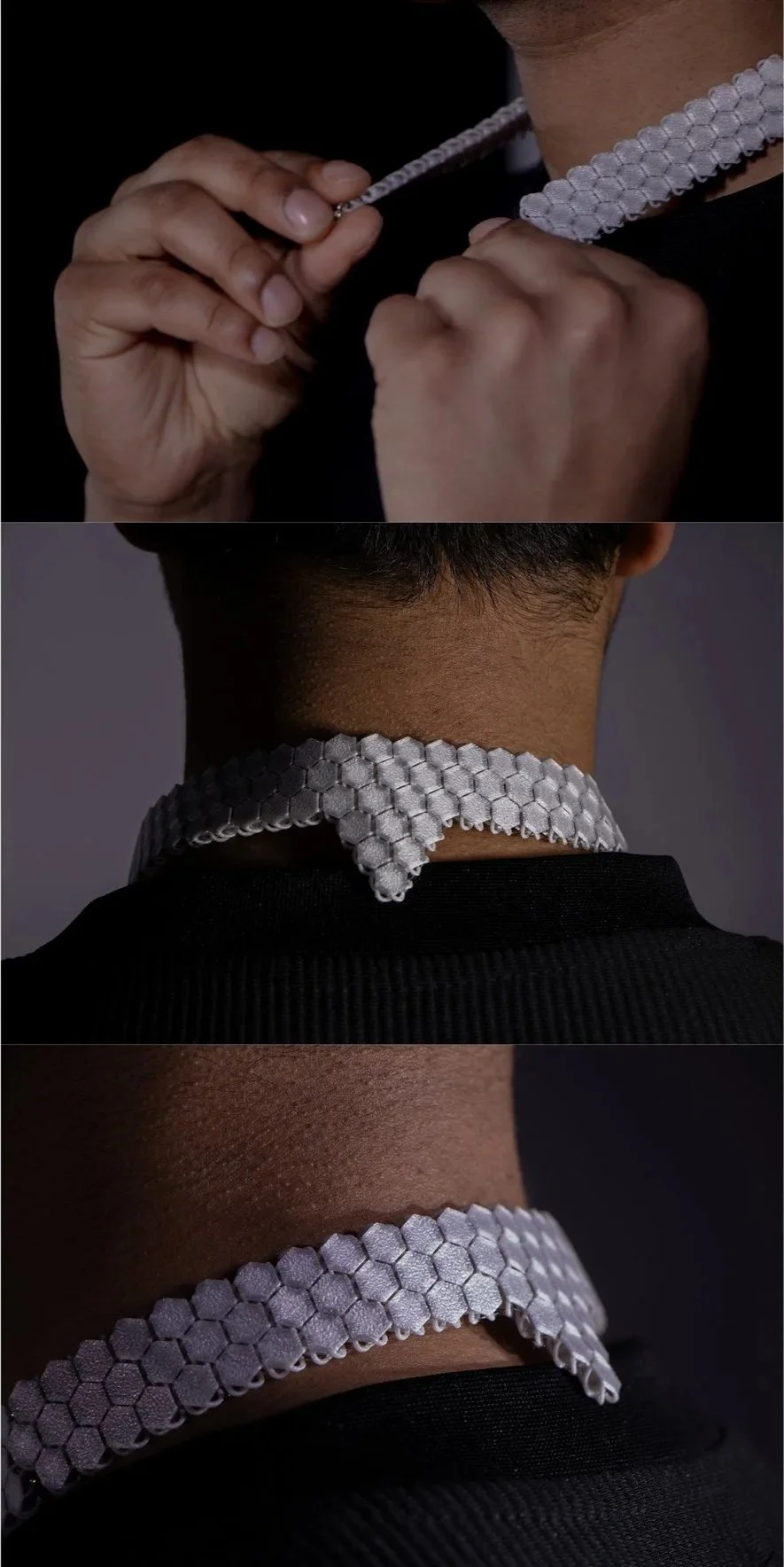
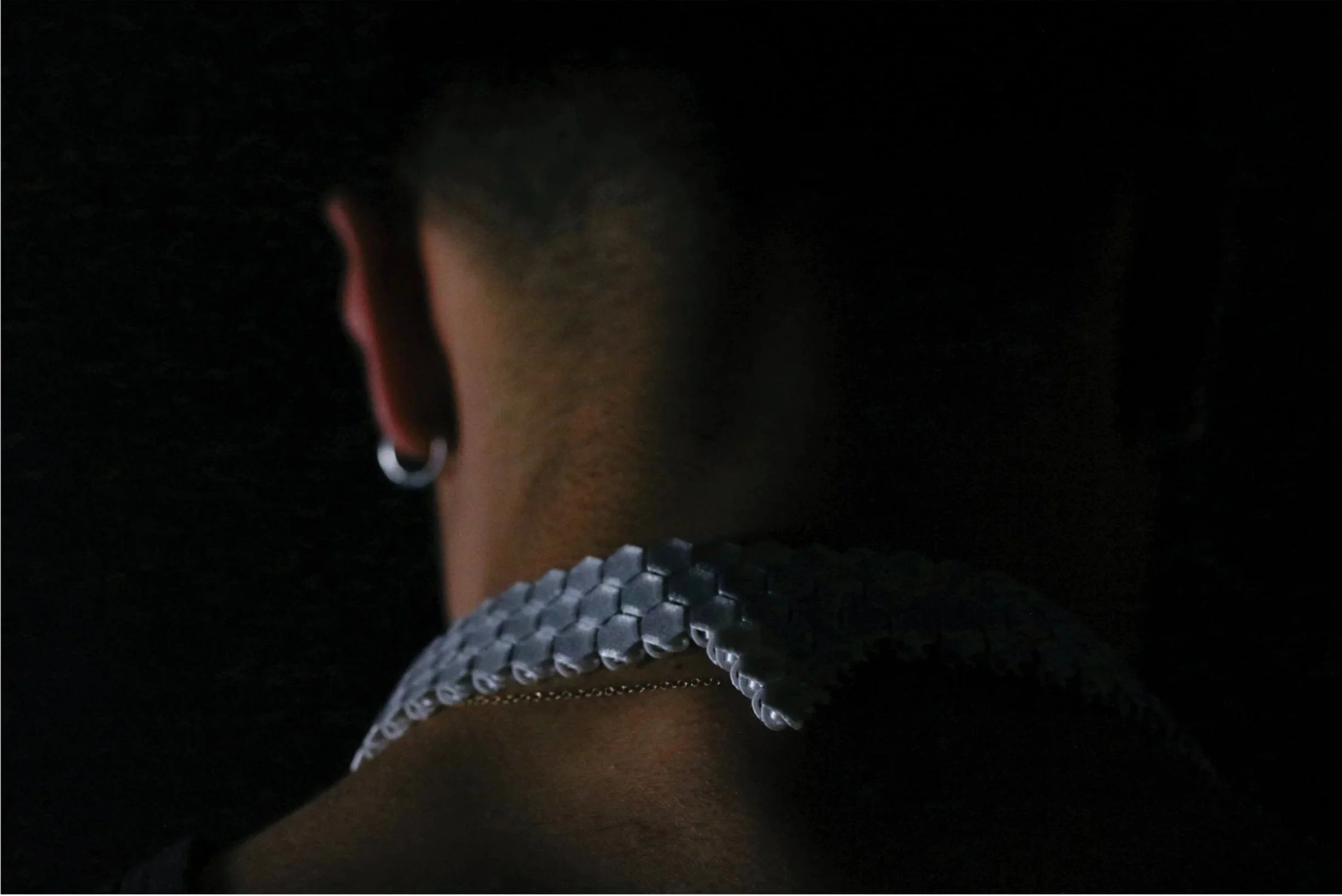
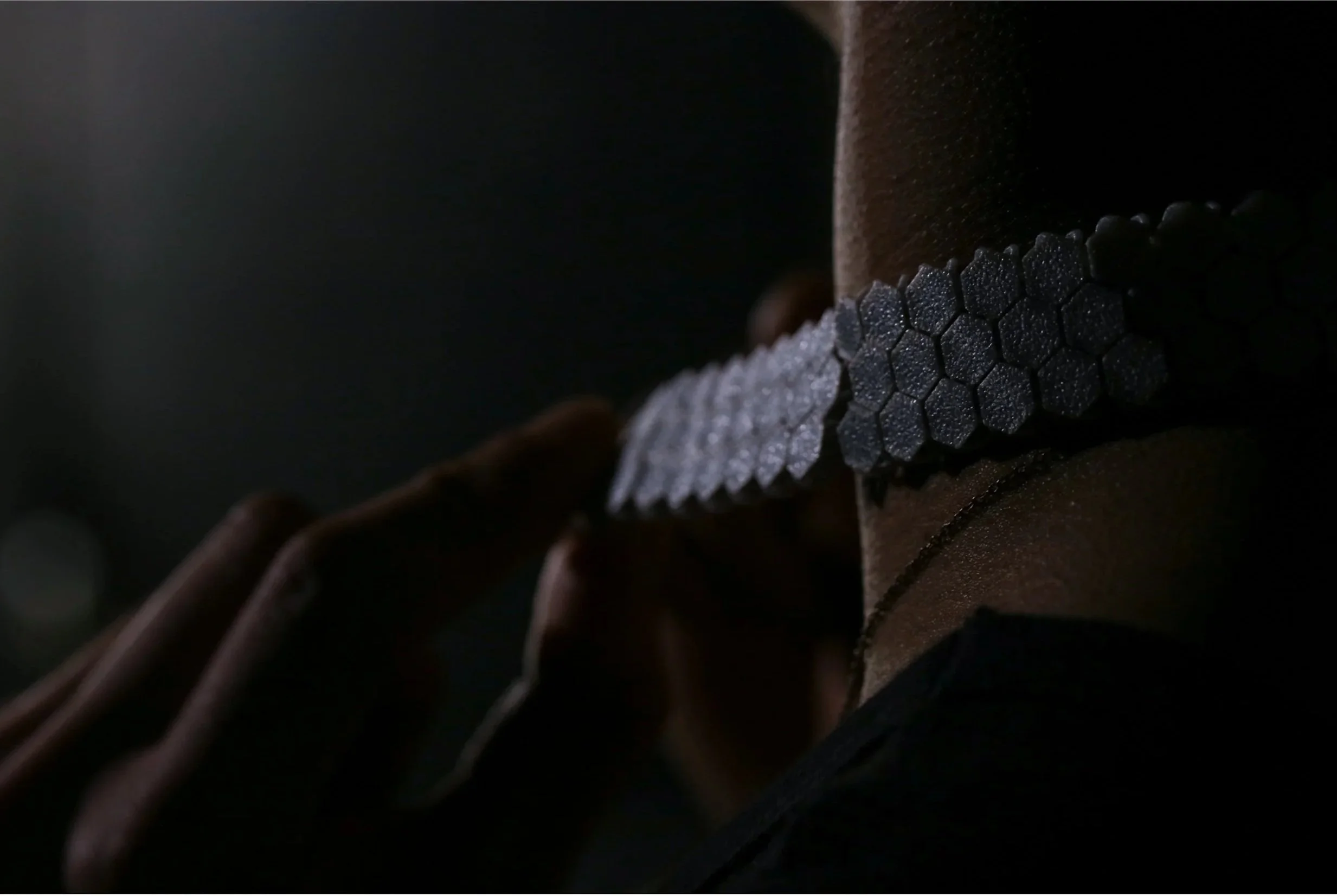
Final prototype in Context
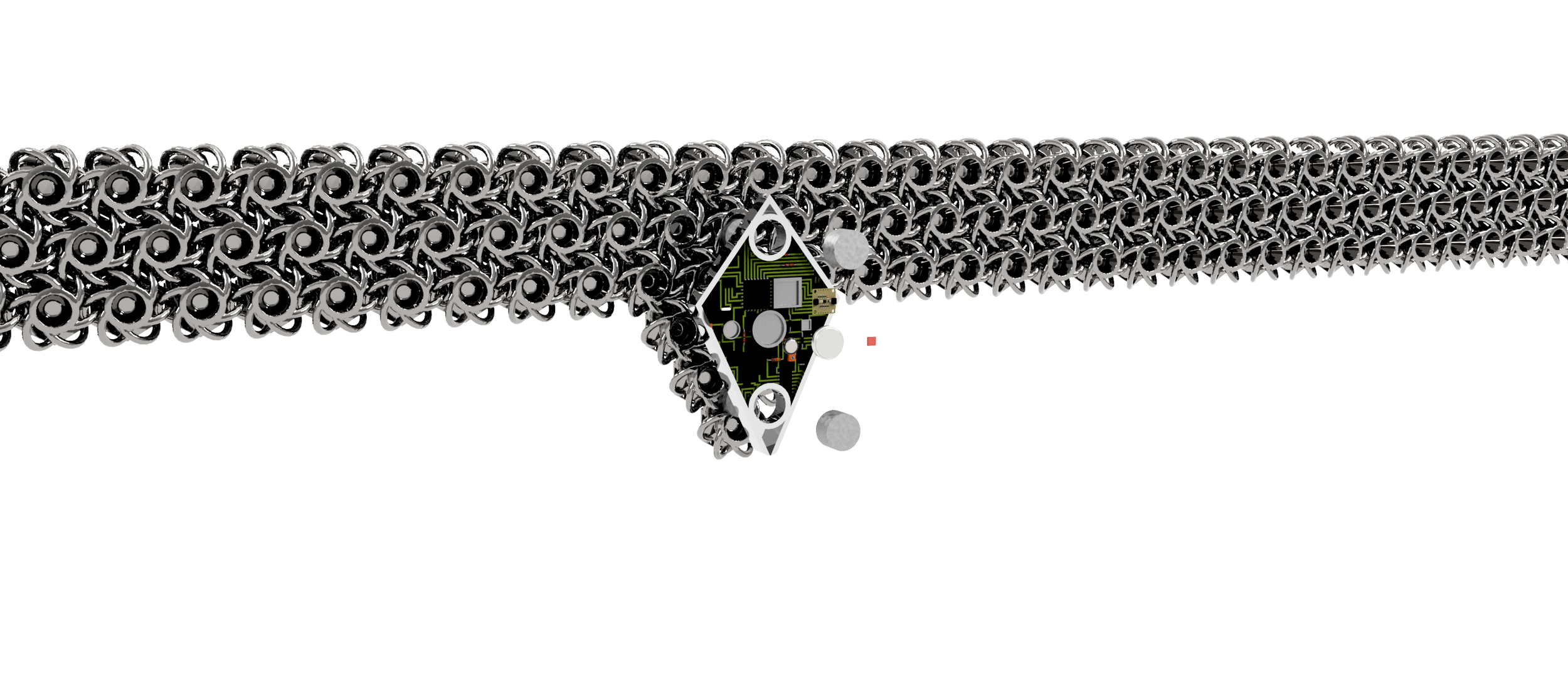
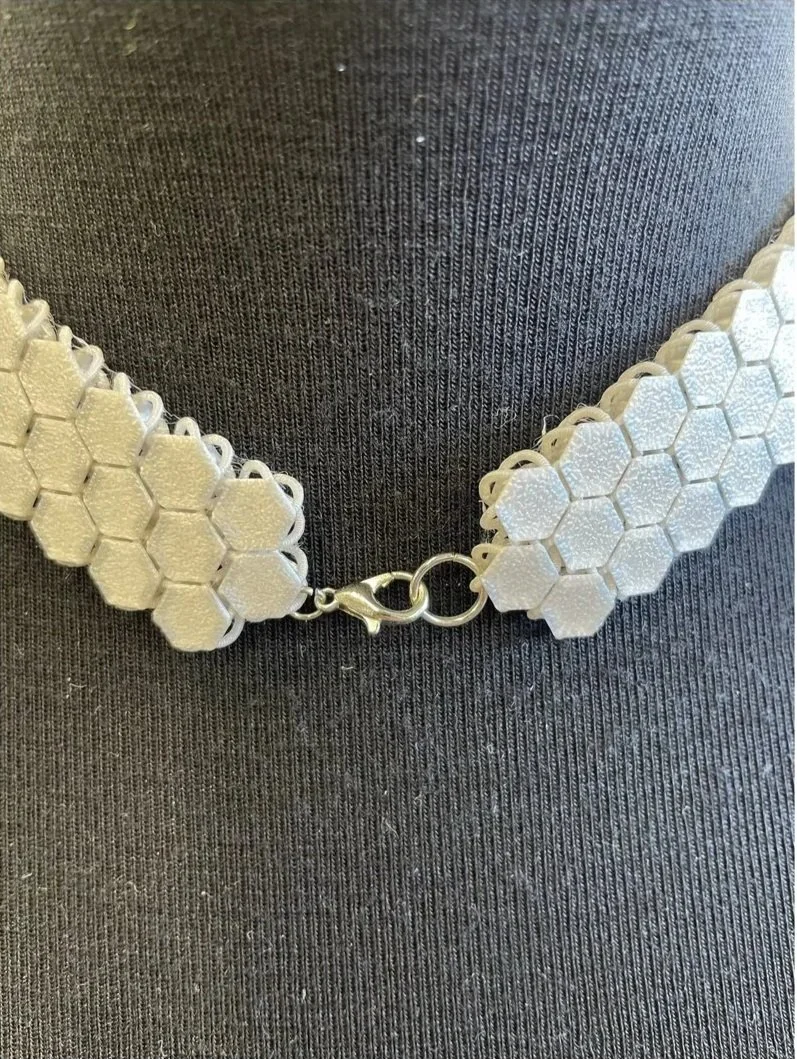
Prototype clasp
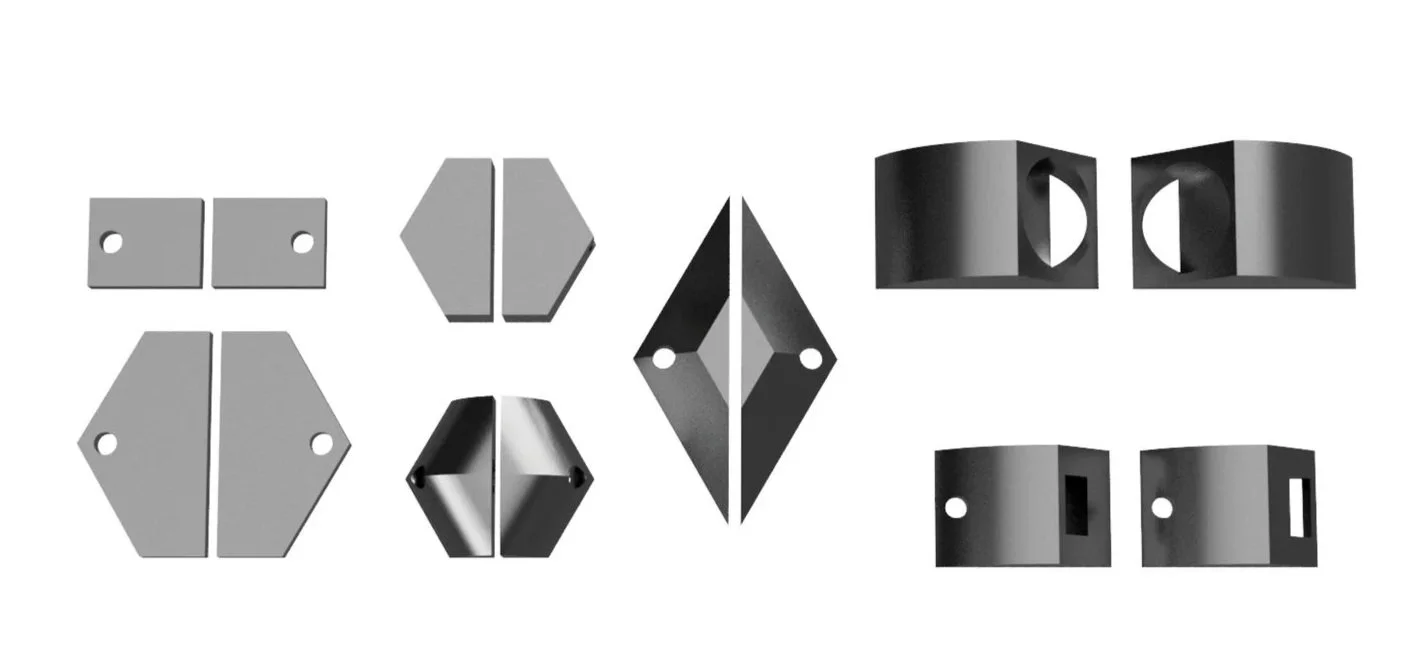
Clasp Concept Generation

Final prototype clasp
Apple. 2025. Our Values. https://investor.apple.com/our_values/default.aspx
Fineck. 2014. Veari presents fineck smart wearable device for neck health. designboom | architecture & design magazine. https://www.designboom.com/technology/veari-fineck-smart-wearable-device-neck-health-11-25-2014/
Park, G.; Jung, I.Y. Real-Time Forward Head Posture Detection and Correction System Utilizing an Inertial Measurement Unit Sensor. Appl. Sci. 2024, 14, 9075. https://doi.org/10.3390/app14199075
Figure 1.
Fineck. 2014. Veari presents fineck smart wearable device for neck health. designboom | architecture & design magazine. https://www.designboom.com/technology/veari-fineck-smart-wearable-device-neck-health-11-25-2014/
Figure 2,3,4,5,6
Park, G.; Jung, I.Y. Real-Time Forward Head Posture Detection and Correction System Utilizing an Inertial Measurement Unit Sensor. Appl. Sci. 2024, 14, 9075. https://doi.org/10.3390/app14199075
Figure 7.
Apple. 2024. Apple Watch. 2025. https://www.apple.com/nz/watch/
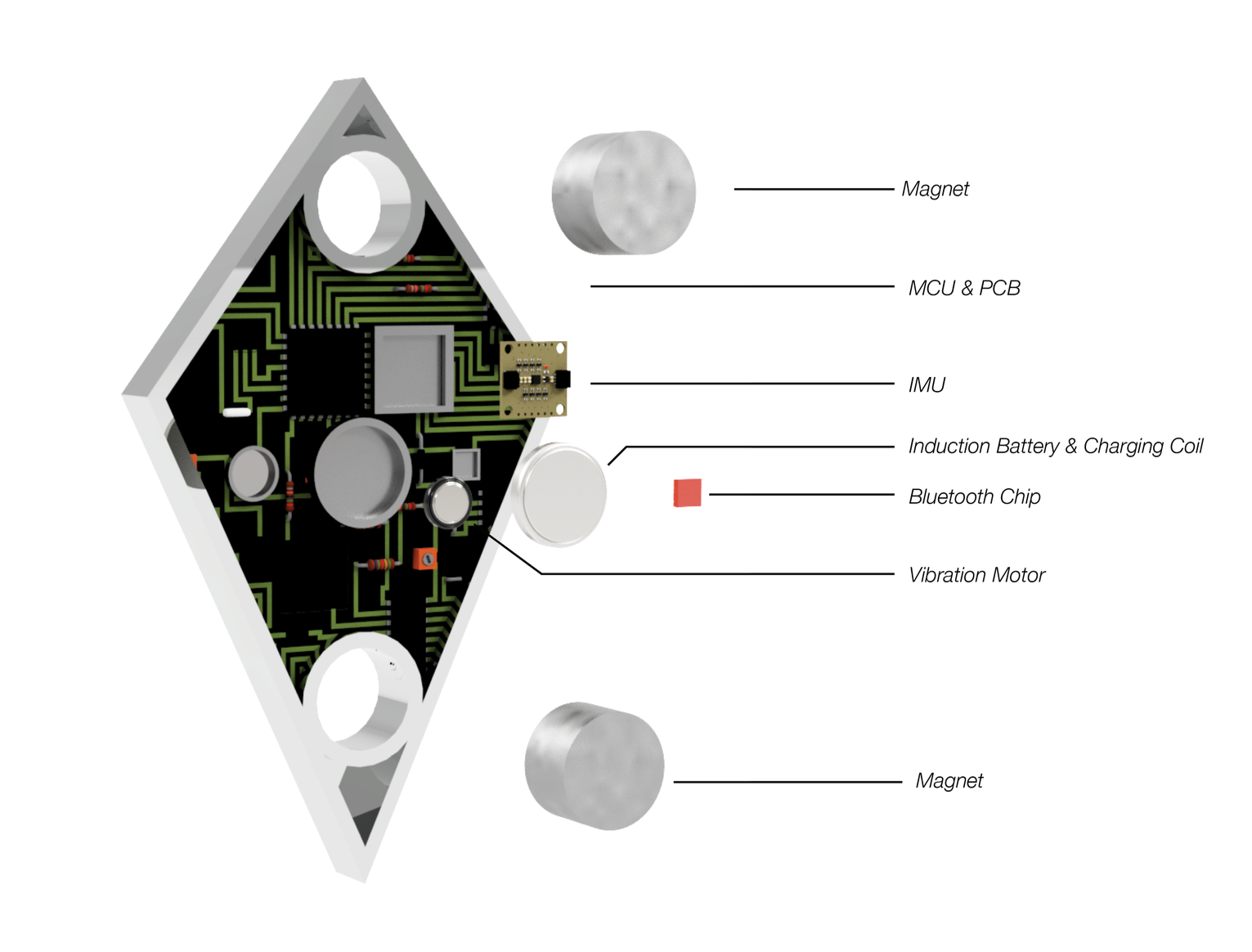
Electronic pod
IMU:
https://www.bosch-sensortec.com/products/motion-sensors/accelerometers/bma456/
Battery:
https://www.lipobatteries.net/
Charging:
https://www.wirelesschargingcoil.com
MCU:
https://www.zmescience.com/science/the-worlds-smallest-microcontroller-could-reshape-the-future-of-wearable-tech-and-medicine/
PCB :
https://www.epectec.com/flex/flexible-pcb-microcircuits.html
Bluetooth:
https://www.tdk-electronics.tdk.com/en/374108/tech-library/articles/products-technologies/products-technologies/world-s-smallest-bluetooth-v4-1-smart-module/1359468?utm_source=chatgpt.com
Charging Coil
https://nz.rs-online.com/